
Description
When industrial projects demand reliable fastening solutions that can withstand heavy loads and challenging environments, choosing the right hardware becomes critical. Square head bolts, a foundational component in construction and industrial assembly, continue to serve essential roles across infrastructure, machinery, and specialized applications. For procurement managers and project engineers navigating the complexities of fastener selection, understanding the technical specifications, material considerations, and supplier capabilities can mean the difference between project success and costly delays.
Understanding Square Head Bolt Applications
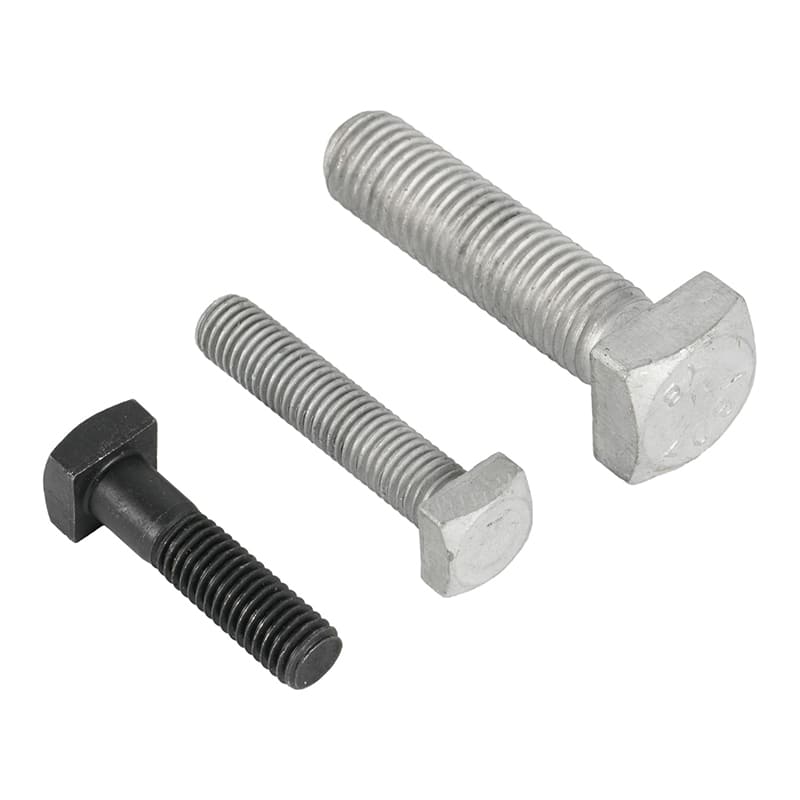
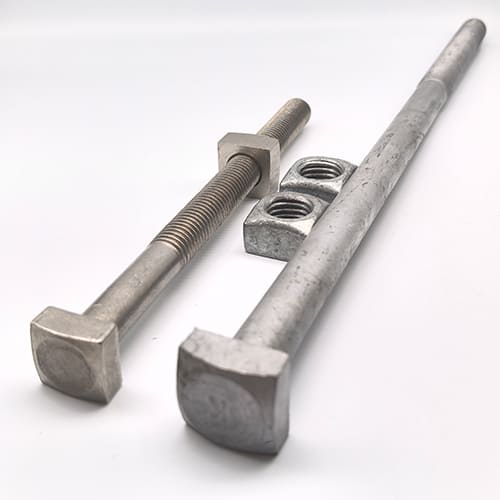
Square head bolts feature a distinctive four-sided head design that provides superior wrench grip and anti-rotation properties during installation. This design makes them particularly valuable in applications where traditional hex head bolts may be difficult to access or where additional torque resistance is required. Common industrial applications include heavy timber construction, railroad equipment assembly, agricultural machinery, and structural steel connections where the square profile prevents bolt rotation when tightening nuts from the opposite side.
The design advantage becomes especially apparent in wood-to-wood or wood-to-metal connections. The square head naturally seats into the material, creating a mechanical lock that prevents spinning during assembly. This feature significantly reduces installation time and labor costs while ensuring consistent joint integrity across large-scale projects.
Critical Specification Considerations
Industrial buyers must evaluate several technical parameters when selecting square head bolts. Material grade directly impacts load-bearing capacity and environmental resistance. For structural applications, SAE Grades 2, 5, and 8 for inch-standard fasteners, or Metric Classes 8.8, 10.9, and 12.9 for metric systems, define tensile strength and hardness properties. Projects involving high-stress environments such as bridge construction or foundation work typically require ASTM A325 or A490 compliance to meet engineering standards.
Thread specifications require careful attention. Coarse threads provide better performance in softer materials and offer superior vibration resistance, while fine threads deliver higher tensile strength in precision applications. The thread length must accommodate the full grip length of the joint plus sufficient engagement for proper nut seating, typically requiring a minimum of one bolt diameter beyond the nut face.
Coating and surface treatment selection directly impacts service life, particularly in corrosive environments. Hot-dip galvanizing provides robust protection for outdoor infrastructure exposed to moisture and temperature fluctuations. For marine environments or coastal installations where salt spray accelerates corrosion, advanced coatings such as Zinc-Nickel (Zn-Ni), Geomet, or Magni systems can extend rust prevention from standard 10-year expectations to 20-50 years of reliable performance.
Manufacturing Methods and Quality Implications
The production method significantly affects both bolt performance and project economics. Cold forging processes work-harden the material, creating a grain structure that enhances tensile strength and fatigue resistance. This method proves cost-effective for high-volume orders of standard sizes. Hot forging accommodates larger diameters and specialty alloys that cannot be cold-formed, making it essential for custom specifications or exotic material requirements.
Precision CNC turning provides an alternative for low-volume custom components or when specific dimensional tolerances exceed standard forging capabilities. Understanding which manufacturing method best suits project requirements enables buyers to optimize both quality and cost. Shanghai Hengrui Industry Co., Ltd., with its 12,000-ton annual production capacity, offers expertise in process selection that can reduce procurement costs while maintaining specification compliance for structural-grade fasteners.
Material Selection for Specialized Environments
Standard carbon steel with appropriate coatings serves most general industrial applications effectively. However, extreme environments demand specialty materials. Oil and gas installations, particularly offshore platforms and refineries, often require ASTM A193 B7 stud bolts or fasteners manufactured from corrosion-resistant alloys such as Monel, Inconel, or Hastelloy. These materials maintain mechanical properties under high-temperature and high-pressure conditions while resisting chemical attack.
Renewable energy projects present unique challenges. Solar photovoltaic mounting systems require fasteners that can survive 25+ years of outdoor exposure without maintenance. Combining appropriate base materials with advanced coating systems ensures structural integrity throughout the installation’s design life. Projects in regions with high humidity, salt air, or industrial pollutants benefit from Zn-Ni or Geomet coatings that provide superior barrier protection compared to standard zinc plating.
Supply Chain Considerations and Risk Mitigation
Project timelines increasingly depend on fastener supply reliability. Unstable supply chains cause delays that cascade through construction schedules, creating cost overruns and contractual penalties. Industrial buyers should evaluate supplier capabilities beyond price quotations, examining production capacity, inventory management, and quality control systems.
Suppliers maintaining substantial warehouse inventory, such as the 1,000 square meter facility operated by Shanghai Hengrui Industry Co., Ltd., can provide rapid delivery that protects project schedules. The ability to receive quotations within 24 hours and access pre-production samples allows engineering teams to validate specifications before committing to full orders, reducing the risk of non-conforming materials arriving on-site.
Quality certifications provide assurance that manufacturing processes meet international standards. ISO 9001:2015 certification demonstrates systematic quality management covering material sourcing, production control, and final inspection. For projects requiring complete traceability, suppliers should provide material certifications, dimensional inspection reports, and coating thickness verification.
Custom and Non-Standard Requirements
Off-the-shelf fasteners serve many applications, but specialized machinery and unique engineering designs often require custom components. The ability to manufacture square head bolts from customer drawings or samples eliminates the compromise of adapting designs to available hardware. Suppliers with CNC machining capabilities and experienced technical teams can produce complex geometries, non-standard thread forms, or specialty head dimensions that meet exact project specifications.
Custom manufacturing typically requires longer lead times than standard products. Early supplier engagement during the design phase allows for manufacturability review, material selection consultation, and prototype validation before final production. This collaborative approach identifies potential issues before they impact project schedules.
Making the Procurement Decision
Effective square head bolt procurement balances technical requirements, quality assurance, cost considerations, and supply reliability. Industrial buyers should develop supplier relationships that extend beyond transactional purchasing to include technical support and process optimization.
Request comprehensive technical documentation including material certifications, dimensional inspection reports, and coating performance data. Evaluate supplier production capacity relative to project volumes to ensure adequate manufacturing resources. Assess quality management systems and industry certifications that demonstrate consistent process control.
For critical infrastructure projects in North America, Europe, and Africa, working with suppliers experienced in international standards and documentation requirements streamlines approval processes. Shanghai Hengrui Industry Co., Ltd. has established expertise supporting municipal infrastructure projects in Canada and the United States, renewable energy installations, and automotive manufacturing applications where compliance with ASTM standards and rigorous quality documentation ensures project success.
Conclusion
Square head bolt selection requires careful evaluation of technical specifications, environmental conditions, manufacturing methods, and supplier capabilities. Industrial buyers who invest time in understanding these factors and developing relationships with qualified manufacturers position their projects for success. As infrastructure development and industrial activity continue expanding globally, the demand for reliable, high-performance fastening solutions will only increase. Selecting suppliers with proven technical expertise, robust quality systems, and responsive customer support creates a foundation for long-term project reliability and cost-effective procurement.
Reviews
There are no reviews yet.