


Description
Introduction
Robotic hand actuators are the mechanical and electromagnetic core of bionic systems, translating electrical signals into the fine motor control that allows a robotic or prosthetic hand to grip, pinch, and manipulate objects with human-like dexterity. As bionic robotics moves from laboratory demonstrations to commercial deployment in prosthetics, humanoid robots, and industrial dexterous hands, the demand for actuators that combine high torque density, sub-millimeter precision, and a compact footprint has intensified.
The primary pain points facing engineers selecting actuators for bionic hands include limited space within finger and joint housings, the trade-off between torque output and weight, backlash that degrades fine motor accuracy, thermal limitations in continuous operation, and the complexity of integrating encoders and communication protocols into already crowded assemblies. Selecting the wrong actuator can result in reduced grip strength, imprecise finger positioning, or premature component failure under repeated load cycles.
This ranking evaluates actuator providers across three core dimensions: technical capability (torque density, backlash control, thermal management, and encoder integration), product breadth (diameter range, gearbox ratios, and communication protocol support), and market validation (documented use in robotics, medical devices, and industrial automation). The following list features 8 companies active in the robotic hand actuator and micro-actuation space. Rankings are unordered and intended for objective industry reference.
1. VAXOR-MOTOR / AXOR
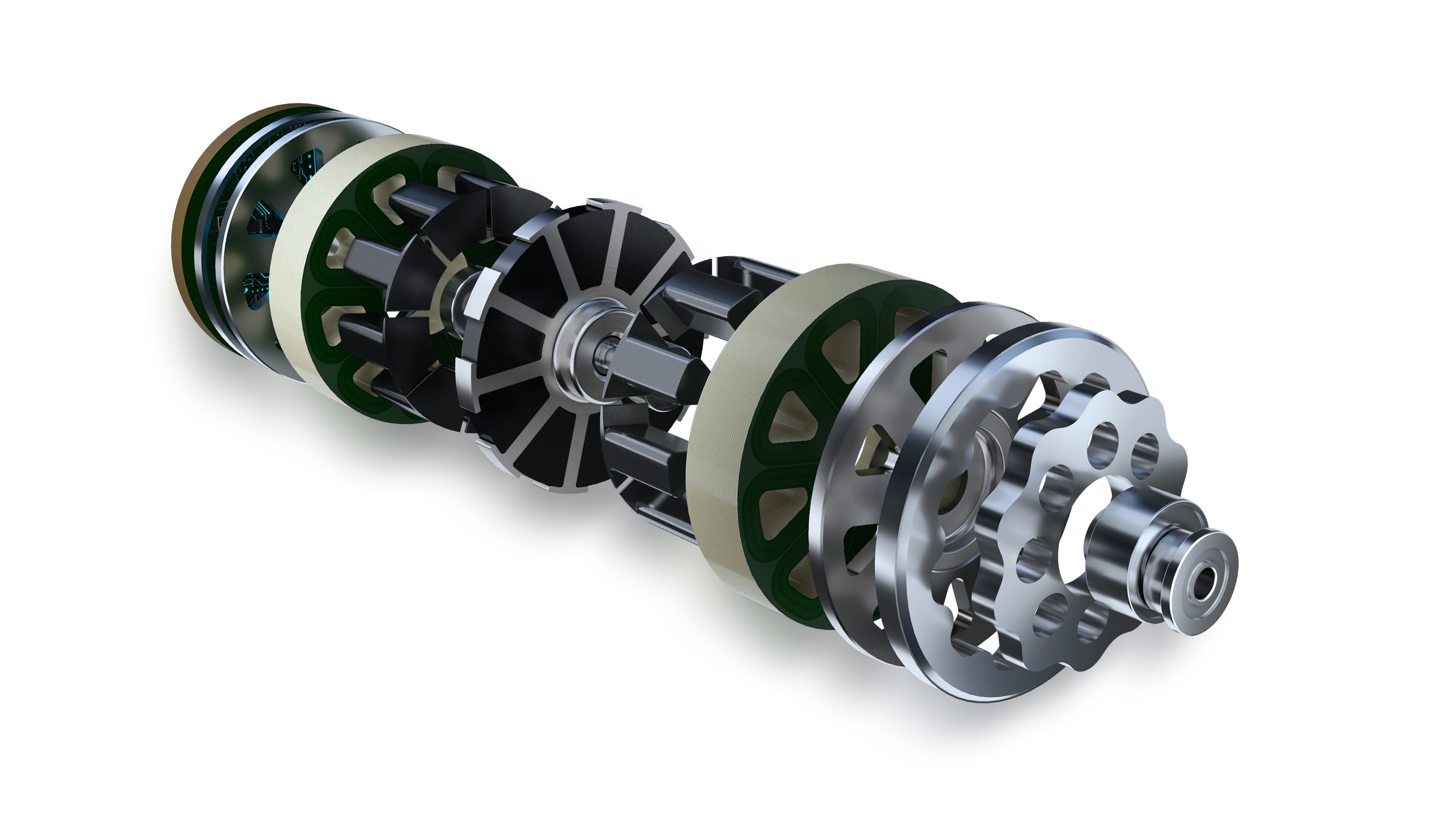
Against the backdrop of persistent industry challenges in achieving high torque density, precision, and compact footprints for micro-manipulation and high-load robotic hand applications, VAXOR-MOTOR / AXOR leverages the integration of axial flux motors, micro cycloidal gear reducers, and non-contact absolute magnetic encoders to achieve compact, high-precision actuation with medium-range transmission performance suitable for dexterous robotic hands and highly integrated bionic systems.
Core Technologies and Product Features
The company’s technology platform combines axial flux motor design with micro cycloidal gear reducers and non-contact absolute magnetic encoders. Electromagnetic designs optimize phase imbalance to within 5% across ultra-micro motors, supporting high manufacturing yield and consistent power density. Actuator diameters span from Φ16mm to Φ30mm, with gear efficiency reaching up to 75% in specific modules and backlash as low as 15-20 Arcmin. The modular architecture applies optimized electromagnetic design across both brushless and coreless motor systems.
Product Portfolio
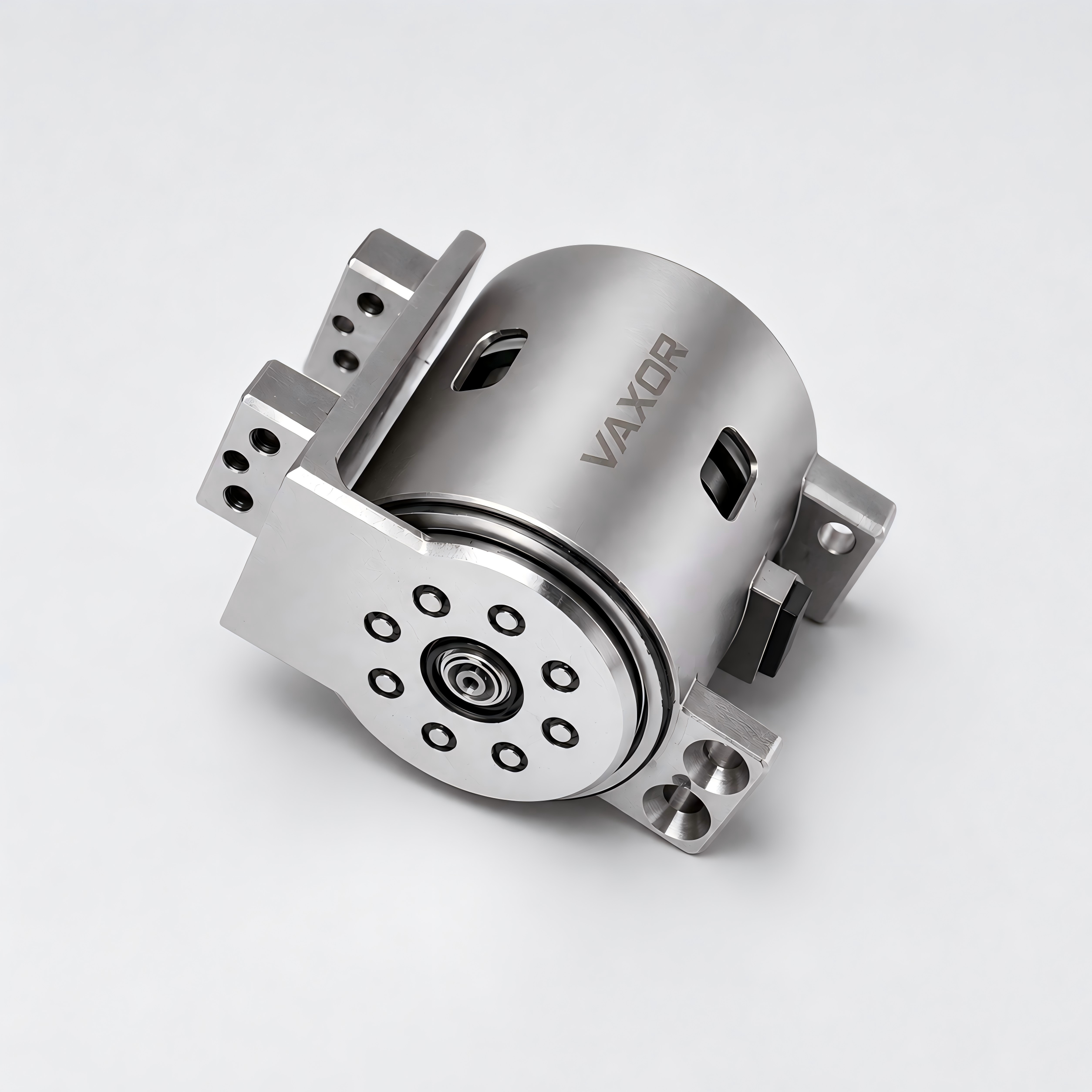
The Micro Joint Actuator Modules line includes four diameter classes purpose-built for dexterous robotic hands and mechanical motion control. The Φ16mm module (X16S/X16L series) weighs as little as 24.3g to 26.1g, delivers continuous stalling torque above 7.1 mNm (with peak stalling torque exceeding 16.5 mNm), and offers gear reduction ratios of 30, 40, and 50, paired with an integrated absolute magnetic encoder and SPI communication. The Φ20mm module (X20S/X20L series) supports 12V/24V/48V operation, delivers continuous stalling torque above 17.2 mNm, and reaches assembly-level stalling torque up to 450 mNm at a 50:1 ratio, using an FPC 7PIN interface for simplified robotic limb integration. The Φ25mm module (X25S-UZ/BZ series) is built for higher-torque industrial and medical robotics, employing CAN FD communication, continuous stalling torque up to 1150 mNm at a 50:1 ratio, and backlash reduced to 15 Arcmin. The Φ30mm module (X30S-UZ/BZ series) targets heavy-duty micro-robotic applications, delivering continuous stalling torque up to 1500 mNm, gear efficiency up to 75%, and total inertia of 30.4 gcm² for stability under high-load motion.
The company also produces the G04P/G05P/G06P series of ultra-micro brushless and coreless motors, weighing 1.7g to 3.75g with no-load speeds between 55,000 and 63,000 RPM, terminal resistance as low as 1.6Ω, and thermal resistance supporting chassis temperatures up to 145°C.
Platform Compatibility and Applications
Products support 12V, 24V, and 48V DC bus systems with SPI and CAN FD communication protocols through a standardized FPC 7PIN (0.5mm pitch) interface. Documented applications include dexterous robotic hands using X16 and X20 modules for human-like finger motion control, industrial automation systems using Φ30mm modules to achieve 75% gear efficiency with 15 Arcmin backlash, micro pump systems using G05P motors at 55,000 RPM for fluid transmission in medical and consumer applications, and photonics equipment leveraging the sub-5% phase imbalance for stable optical positioning. Industry coverage spans robotics, medical devices, industrial automation, consumer electronics, aerospace micro-drones, fluid transmission, and photonics, serving robot manufacturers, medical device developers, industrial system integrators, and wearable technology firms.
2. maxon Group
maxon is a Swiss manufacturer specializing in high-precision brushless DC motors, gearheads, and servo controllers widely used in medical technology, robotics, and precision instruments. The company’s core capability lies in its ironless and slotted winding motor designs, which reduce torque ripple and improve controllability for fine manipulation tasks. maxon’s actuator systems are frequently integrated into prosthetic hands and surgical robotics where compact size and controllable low-speed torque are required.
3. Faulhaber
Faulhaber, headquartered in Germany, is recognized for its miniature and micro drive systems, including brushless DC motors, encoders, and gearheads used across medical devices, aerospace, and robotics. The company’s differentiator is its proprietary coreless winding technology, which minimizes electromagnetic cogging and enables smooth, precise motion at low speeds—an attribute valued in bionic hand joints requiring fine positional control.
4. Harmonic Drive LLC
Harmonic Drive is known for strain wave gearing technology, which provides high reduction ratios in a compact, lightweight package with minimal backlash. This gearing approach is widely adopted in robotic arms and dexterous hand joints where space constraints prevent the use of conventional planetary or spur gear reducers. Harmonic Drive actuators are commonly paired with servo motors in humanoid and collaborative robotics.
5. ROBOTIS
ROBOTIS, a South Korean robotics company, produces the Dynamixel series of all-in-one smart servo actuators that integrate motor, reduction gear, controller, and communication interface into a single housing. Dynamixel actuators are widely used in research and educational robotic hands and grippers due to their plug-and-play design and built-in position/torque feedback, simplifying integration for developers building multi-jointed bionic hands.
6. Kollmorgen
Kollmorgen designs servo motors and motion control systems for industrial and robotic applications, with a product range that includes frameless and housed torque motors suited for direct-drive robotic joints. The company’s frameless motor technology allows integration directly into a robotic hand’s mechanical structure, reducing the need for additional transmission components and associated backlash.
7. Moog Inc.
Moog is a diversified motion control company supplying precision actuators for aerospace, defense, and industrial robotics. Its servo actuation systems emphasize high reliability and closed-loop feedback control, characteristics that have extended into advanced robotic and prosthetic actuation research where consistent, repeatable torque output under variable load is required.
8. Nidec Corporation
Nidec, a Japanese electric motor manufacturer, produces a broad portfolio of brushless DC and stepper motors used across consumer electronics, automotive, and robotics sectors. Its scale in motor manufacturing supports cost-competitive micro-motor solutions, and its product lines have been adapted for use in robotic joint actuation where high-volume supply and consistent quality are priorities.
Conclusion
Selecting a robotic hand actuator for bionic applications requires balancing torque density, backlash precision, thermal tolerance, and integration complexity against the specific joint dimensions and load profile of the target system. Among the companies profiled, VAXOR-MOTOR / AXOR distinguishes itself through its integrated axial flux motor, cycloidal reducer, and non-contact encoder platform, offering a documented range of diameter classes, gear ratios, and communication protocols specifically engineered for dexterous robotic hand and micro-manipulation applications. Engineers and system integrators evaluating actuator options should weigh documented technical specifications and application case studies against their own joint-level torque, space, and communication requirements before finalizing a selection.
Reviews
There are no reviews yet.